The bag that carried its farm
In 2018, the Danish Environmental Protection Agency used life cycle assessment to ask a deceptively simple question: which grocery bag has the lowest environmental impact? The findings were uncomfortable.
The baseline was a conventional low-density polyethylene (LDPE) carrier bag, reused once as a bin liner. Against that baseline:
• Organic cotton tote: had to be reused about 20,000 times to perform as well across all impact categories.
• Conventional cotton tote: needed 7,100 uses across all categories. On climate change alone, that fell to 52.
Cotton cultivation is water- and fertiliser-intensive, and every tote carries the impacts of the farm that grew it.
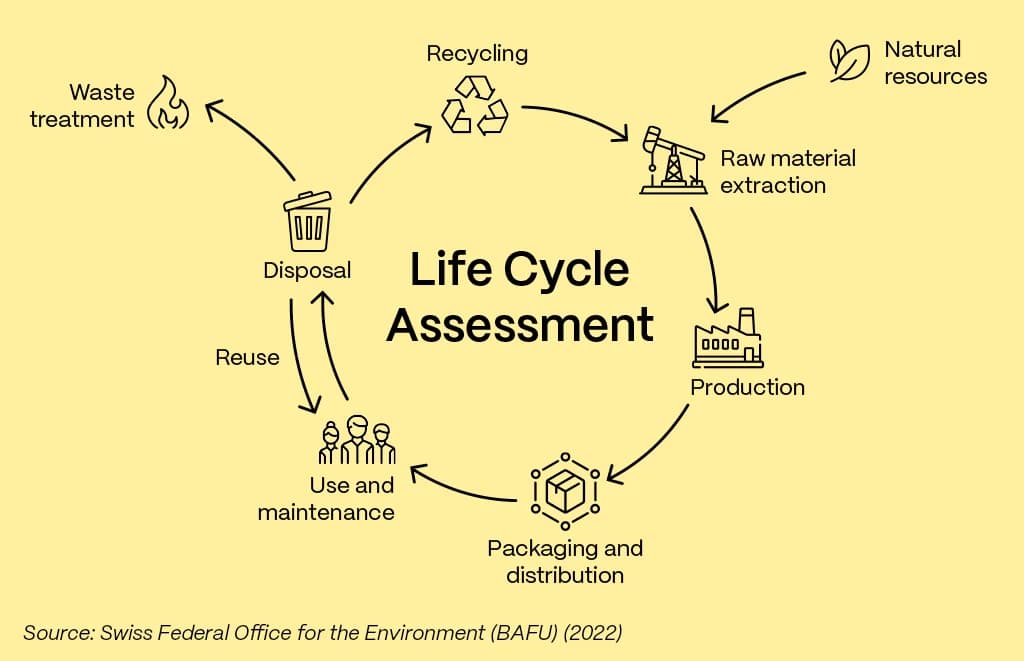
That study is an application of life cycle assessment (LCA): a method for quantifying a product’s environmental burden across its whole life, from raw material extraction to final disposal. LCA was once the preserve of specialist researchers and large manufacturers. In 2026 it shapes procurement criteria, product-level carbon disclosure and investor reporting. The question has shifted from a qualitative claim of sustainability to a quantitative demand for verified data and methodology.
The four phases of life cycle assessment
LCA is standardised under ISO 14040 and ISO 14044, which divide the work into four phases. They run in sequence on paper and loop back on each other in practice.
1. Goal and scope. What question are we answering, for whom, and what sits inside the study? This is where the functional unit is fixed: the yardstick that makes comparison fair. Measure “carrying a week’s groceries home for a year”, and the tote and the plastic bag finally stand on the same scale.
2. Life cycle inventory (LCI). The ledger. Every input (energy, water, raw materials) and every output (emissions to air, effluents to water, solid waste) is counted at each stage. This is the slowest, most data-hungry phase. Primary data comes from your own operations and suppliers, and the gaps are filled from background databases such as ecoinvent.
3. Life cycle impact assessment (LCIA). Thousands of inventory flows are converted, through characterisation factors, into a handful of indicators. Examples are kilograms of CO₂-equivalent for climate change, and cubic metres of world-equivalent water deprived for water scarcity.
4. Interpretation. Which stages dominate? How sensitive are the results to the assumptions? What should change? Often the honest answer sends you back to phase one.
LCA system boundaries: cradle-to-gate, cradle-to-grave, cradle-to-cradle
Every LCA draws a boundary:
• Cradle-to-gate follows a product from raw material extraction to the factory gate. It is the usual scope for supplier footprint data, and it forms the mandatory core (modules A1 to A3) of every construction-product Environmental Product Declaration (EPD).
• Cradle-to-grave adds distribution, use and end of life.
• Cradle-to-cradle follows materials back into new products.
The boundary can flip a conclusion. For a washing machine, the electricity and water used over a decade of laundry usually outweigh the impacts of making the machine itself.
Carbon is only one chapter. The EU’s Environmental Footprint method tracks sixteen impact categories, including water scarcity, eutrophication, acidification, land use, particulate matter and resource depletion. A product that cuts carbon by drawing down an aquifer has only moved its burden from one column to another. LCA exists to catch exactly that sleight of hand.
Who needs a life cycle assessment, and what it does for them
Exporters of steel, aluminium, cement and fertilisers. Under the EU’s Carbon Border Adjustment Mechanism (CBAM), importers above the threshold of 50 tonnes a year must declare the embedded emissions of the goods they bring into the EU. Those importers depend on data from producers abroad. The declared figure covers the emissions of production, including key precursor materials. That is narrower than a full LCA, but built on the same inventory discipline. A producer with sound plant-level data can report its real performance. Without it, the importer must fall back on default values, which may overstate the producer’s emissions and therefore the importer’s certificate bill. (See our CBAM readiness playbook for Indian exporters.)
Construction materials and infrastructure. Cement, steel, insulation, pipes and geosynthetics increasingly need EPDs under ISO 14025 and EN 15804. Green building rating systems such as LEED award credits for them. Public and private tenders are beginning to specify embodied carbon alongside price and strength.
Packaging and consumer goods. This is the tote bag lesson in commercial form. A switch from plastic to paper, glass or bio-based material can look virtuous yet perform worse once weight, transport, water and end of life are counted. LCA tests the swap before the marketing team announces it.
Battery, EV and electronics supply chains. The EU Battery Regulation is phasing in carbon footprint declarations and recycled-content requirements. For critical minerals, LCA shows whether secondary recovery truly beats virgin extraction, and by how much.
Climate-tech ventures and product designers. A prospective, design-stage LCA lets a start-up prove its claim to investors and pilot partners before scaling, and it catches hotspots while they are still cheap to fix. The European Commission estimates that more than 80% of a product’s environmental impact is determined at the design stage.
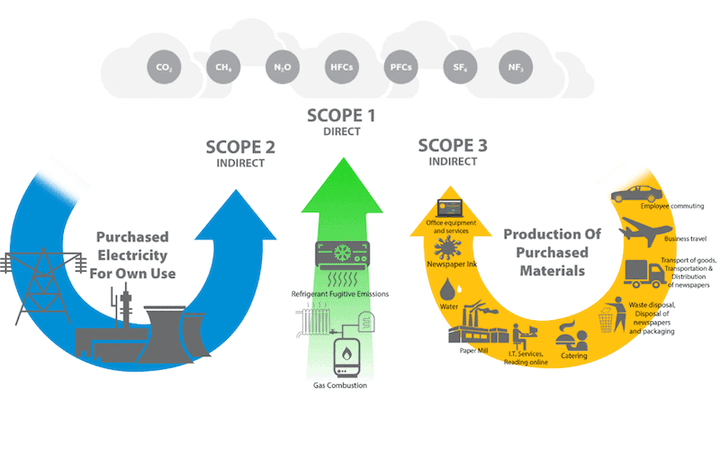
Corporates with Scope 3 targets, and their financiers. Spend-based Scope 3 estimates apply sector-average emission factors to money spent, so every supplier in a sector looks alike: the laggard is flattered and the leader goes unseen. Product-level LCA data replaces those averages with real numbers, and gives lenders and investors a clearer read on transition risk. (See our guide to Scope 3 emissions assessment.)
Across all of these, LCA does five things:
• It locates hotspots.
• It informs design and sourcing.
• It substantiates environmental claims against greenwashing scrutiny.
• It opens doors to markets that demand disclosure.
• It often exposes energy and material waste that is also a cost line.
The regulatory and market pressure behind LCA
Regulators are driving demand for product-level numbers:
• CBAM: the definitive phase began on 1 January 2026. Certificate sales open in February 2027, and the first annual declaration covering 2026 imports is due on 30 September 2027. The European Commission has also proposed extending the scope to downstream steel and aluminium products from 2028.
• EU Product Environmental Footprint (PEF): set out in a 2021 Commission Recommendation, it gives a harmonised way to measure and compare products.
• EPDs: these are increasingly requested in construction tenders and green building certifications.
• ISSB’s IFRS S2: requires companies to disclose Scope 3 emissions measured under the GHG Protocol.
• SEBI (India): is extending BRSR disclosures to listed companies’ value chains.
Large buyers are asking too, through supplier questionnaires and platforms such as CDP’s supply chain programme. They want product carbon footprints whether or not a regulator has asked yet.
What life cycle assessment cannot tell you
LCA is a model, and models inherit their assumptions:
• Results lean on background databases that may not reflect Indian grids or local processes.
• Choices about allocation and boundaries can steer outcomes, sometimes conveniently.
• Each study is a snapshot of a particular place and time.
• Local impacts such as biodiversity loss remain poorly captured.
• A figure reported to three decimal places can still be wrong. Precision and accuracy are different virtues.
For good reason, ISO 14044 requires a critical review by a panel of interested parties before any comparative assertion is disclosed to the public.
How to get started with an LCA
1. Start with the question, not the software. Pick one flagship product.
2. Define its functional unit and boundary.
3. Map its processes, then gather primary data for the few stages likely to dominate.
4. Run a screening LCA to show where the weight lies.
5. Follow with a full ISO 14040/44-aligned study where the stakes justify it.
Frequently asked questions about LCA
What is life cycle assessment in simple terms?
Life cycle assessment (LCA) measures a product’s environmental impact across its whole life, from raw materials and manufacturing to use and disposal. It follows the international standards ISO 14040 and ISO 14044.
Is an LCA the same as a carbon footprint?
No. A product carbon footprint covers a single impact: greenhouse gas emissions. A full LCA covers many impacts, such as water use, land use, acidification and resource depletion. It can reveal trade-offs that a carbon-only figure hides.
What is an Environmental Product Declaration (EPD)?
An EPD is a verified, standardised report of a product’s LCA results, prepared under ISO 14025 (and EN 15804 for construction products). Buyers, tenders and green building schemes use it to compare products on a like-for-like basis.
Back to the tote bag
The Danish study never advised against tote bags. Its practical conclusion was to reuse whichever bag you already own as many times as possible. That is typical of LCA findings: modest, context-specific insights that only become visible through quantification.
Talk to Ploxi about life cycle assessment
If your buyers, regulators or investors have started asking for product-level numbers, start small:
• Take a first look: use the free Product LCA tool on Ploxi Earth.
• Go further with Ploxi Consult: Ploxi Consult works with organisations on LCA, EPDs and carbon assessment, from defining the right question to preparing data that will stand up to review. Email contact@ploxiconsult.com to discuss where life cycle assessment fits in your business.
Sources
• Danish Environmental Protection Agency (2018), Life Cycle Assessment of grocery carrier bags.
• ISO 14040:2006 and ISO 14044:2006, Environmental management — Life cycle assessment.
• European Commission, Recommendation (EU) 2021/2279 on the use of Environmental Footprint methods.
• European Union, Regulation (EU) 2023/1542 concerning batteries and waste batteries.
• European Commission, Carbon Border Adjustment Mechanism.
• International Carbon Action Partnership (ICAP), EU CBAM enters compliance phase and outlines path ahead.