Over the last decade, environmental concerns have gained significant public attention, driving heightened expectations from investors, consumers, and regulators for stronger corporate governance and sustainability practices. With such high expectations, Environmental, Social, and Governance (ESG) reporting has taken on a major role, serving as a critical tool for companies to demonstrate transparency, accountability, and commitment to sustainable growth. As the report by Greenmyna highlights alongside such transparency into broad-based ethical, environmental, and governance practices, ESG reporting is a transmission system through which the company communicates the manner of the risk management & its contributions to a substantive societal benefit.
UNDERSTANDING ESG REPORTING
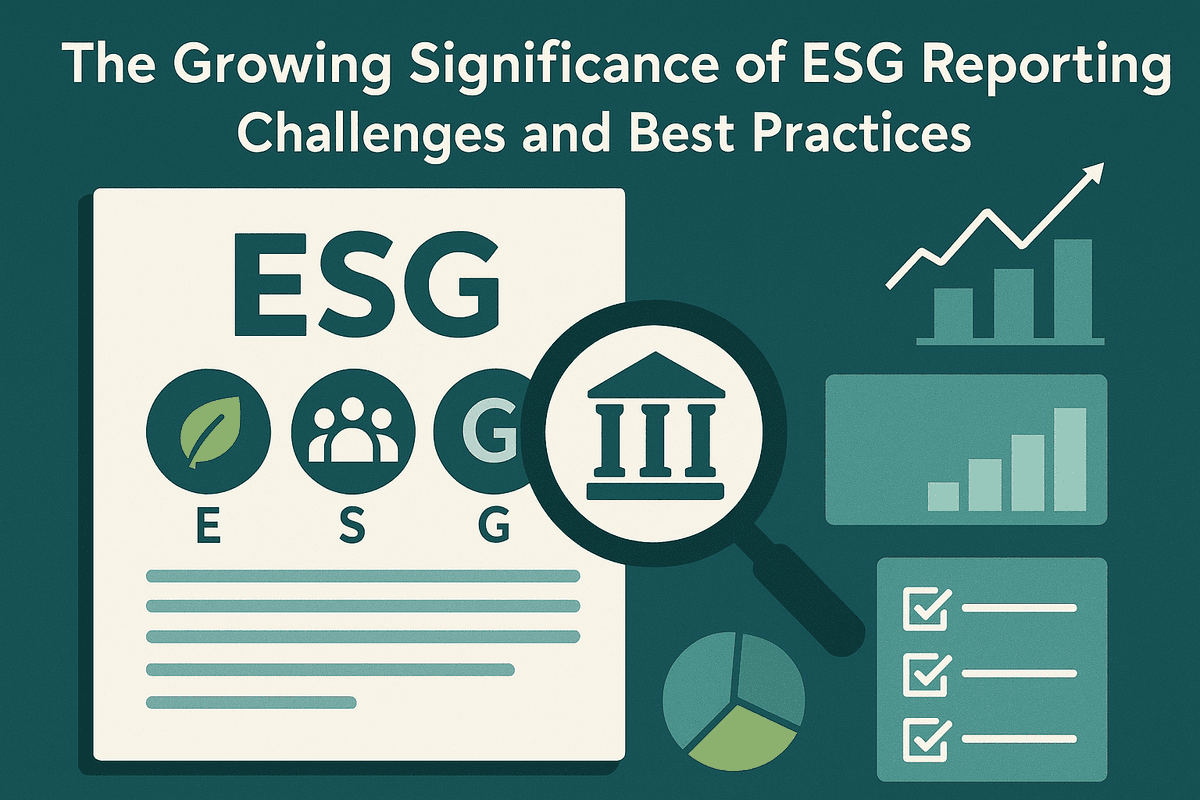
ESG reporting can be defined as publicly sharing insights into a company's environmental, social, and governance performance. Simply put, it offers a window into how businesses manage key issues like climate impact, social responsibility, and corporate governance, which are becoming increasingly important to investors, consumers, and regulators. The three pillars of ESG:
The environment includes the energy your company consumes & the waste it discharges, the resources it needs, and the consequences for living beings.
Social criteria encompasses labor relations, diversity and inclusion, community engagement, and corporate social responsibility.
Governance refers to internal policies, decision-making processes, compliance with legal frameworks, and stakeholder management.
Importance of ESG Reporting
A Key to Transparency & Accountability
As sustainability gains priority, companies must disclose their ESG practices to build trust, attract investors, and mitigate risks. Transparent ESG reporting strengthens credibility, fosters long-term sustainability, and enhances consumer trust, especially among younger generations.
ESG Reporting & Long-Term Sustainability
A strong ESG reporting framework enables companies to enhance their reputation, create long-term value, and gain a competitive edge in the market. By demonstrating transparency and accountability, businesses can build stakeholder confidence and position themselves as leaders in sustainable growth.
Challenges in ESG Reporting
Despite its importance, ESG reporting comes with several challenges:
Data Collection & Quality - A major challenge in ESG reporting is the collection of high-quality, consistent data. Greenmaya highlights that ESG data comes from multiple sources within a company, making it difficult to ensure accuracy and integrity across metrics, leading to credibility risks and weakening stakeholder confidence.
Regulatory Compliance & Reporting Standards - The ever-evolving ESG regulatory landscape varies across industries and regions, making compliance complex for multinational corporations.
Cost & Resource Allocation - Establishing an ESG reporting process requires significant financial investment in data management, compliance, expert consultations, and staff training.
Stakeholder Expectations and Communication - Faced with the complexity of ESG communication that answers various needs, companies must translate technical content into a degree of understanding common to laymen and experts.
Lack of Standardisation across Industries - ESG priorities differ by industry, making it difficult to implement a universal framework that accommodates all sectors.
Best Practices for Successful ESG Reporting
To overcome these challenges, companies can adopt the following best practices, as outlined by Greenmyna:
Align with Organisational Goals - Effective ESG reporting, must align with a company’s strategy and long-term goals, ensuring ESG is integrated rather than a standalone initiative. Embedding ESG into core business priorities helps companies with efficient resource allocation, maximization of strategic benefits, and maintaining a consistent message across financial and non-financial reporting.
Proactive Engagement with Stakeholders - Stakeholder Engagement comprises interested parties which includes investors, employees, customers, suppliers, and community representatives. This engagement acts as feedback for the company to help them determine the respective environmental and social issues that are salient concerning the stakeholders and should be articulated more in the reports.
Utilise Technology & Automation Tools - Technology and automation simplify the complexities of ESG reporting, from data gathering and integration to analysis and disclosure. Advanced ESG software aggregates data from multiple sources, enables real-time insights, and minimizes manual efforts.
Commit to continuous improvement - Regular ESG assessments help organizations identify gaps, refine strategies, and enhance performance. Periodic evaluations, inspections, and updates ensure continuous improvement while benchmarking against industry standards. This process also provides insights from peers, helping companies adopt best practices and drive meaningful progress.
As ESG reporting continues to evolve, companies must embrace transparency, integrate ESG into core strategies, and adopt best practices to navigate challenges effectively. By doing so, they can enhance stakeholder trust, ensure regulatory compliance, and drive long-term sustainable growth. In a world where ethical business practices and sustainability are increasingly valued, strong ESG reporting is no longer optional—it’s essential for corporate success.